
Sony PlayStation Platform Business: How It Works, What It Earns, and Where It’s Headed

Few names carry as much weight in gaming as PlayStation. The Sony PlayStation platform business has evolved from a scrappy challenger in the mid-1990s into one of the most powerful entertainment ecosystems on the planet — and understanding how it actually operates reveals a fascinating story about hardware, software, subscriptions, and long-term strategy.
Whether someone is wondering if PlayStation is still owned by Sony, curious about its profitability, or thinking about how the PlayStation platform fits into Sony’s broader empire, this deep-dive covers it all.
What Is the Sony PlayStation Platform Business?
At its core, the Sony PlayStation platform business is Sony’s gaming and interactive entertainment division. It’s officially housed under Sony Interactive Entertainment (SIE), a wholly owned subsidiary of Sony Group Corporation. So yes — PlayStation is still owned by Sony, and has been since the original console launched in Japan in December 1994.
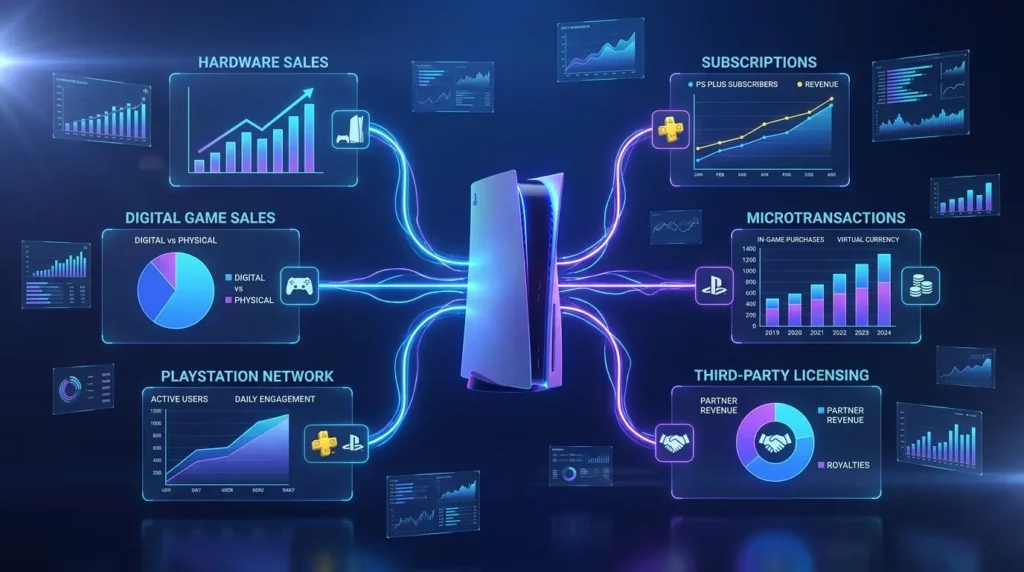
The platform encompasses several distinct revenue streams:
- Hardware sales — consoles like the PS5, plus peripherals and accessories
- Software sales — first-party titles published by PlayStation Studios, plus third-party game sales through the PlayStation Store
- PlayStation Network (PSN) — the online infrastructure that connects tens of millions of players
- PlayStation Plus — the subscription service offering online multiplayer access, free monthly games, and a growing catalog of titles
Together, these form what analysts typically call the “PlayStation ecosystem.” The goal isn’t just to sell a box — it’s to keep players spending time and money inside Sony’s walled garden for years after they buy that box.
Is PlayStation Profitable for Sony?
This is one of the most-searched questions around the Sony PlayStation business, and the answer is nuanced.
PlayStation is consistently one of Sony’s most significant revenue contributors. Sony’s Game & Network Services segment — which is essentially the PlayStation business — regularly generates annual revenues exceeding $25 billion. In recent fiscal years, it has accounted for roughly 25–30% of Sony Group’s total revenue, making it the single largest segment by sales.
However, hardware profitability is complicated. Consoles are historically sold at or near break-even — sometimes at a loss — with the real money made on software, subscriptions, and digital content. Sony follows this same playbook. The PS5 launched in late 2020 at a loss per unit, but as manufacturing costs fell, Sony eventually moved into hardware profitability per unit sold.
Where Sony really makes money on PlayStation:
- Digital game sales carry higher margins than physical copies
- PlayStation Plus subscriptions provide recurring, predictable revenue
- In-game purchases and microtransactions across the platform add up significantly
- Licensing fees from third-party publishers using the PSN storefront
So while the hardware side can squeeze margins, the overall Sony PlayStation business model is designed to profit handsomely from the software and services layer sitting on top of it.
What Is Sony’s Most Profitable Business Overall?
Interestingly, PlayStation isn’t Sony’s most profitable segment by operating income — that distinction often goes to Sony’s Financial Services and Music divisions, depending on the year. Sony’s music business (home to labels like Columbia and RCA, plus Spotify equity stakes) and its image sensor division generate strong operating margins.
That said, PlayStation contributes massive top-line revenue that few other Sony units can match. When people talk about Sony’s net business performance, the gaming division almost always dominates the revenue conversation, even if margins fluctuate.
Sony’s diverse portfolio — spanning music, movies, semiconductors, and electronics — means PlayStation plays a critical but not singular role. It’s the company’s consumer-facing entertainment crown jewel.
How the PS5 Fits Into the Bigger Picture
The PS5 has been central to the Sony PlayStation platform business ps5 strategy. After a supply-constrained launch during the pandemic, Sony gradually ramped production, eventually achieving strong install base numbers. By mid-2024, over 59 million PS5 units had been shipped globally.
The PS5 isn’t just a more powerful PlayStation 4 — it represents Sony’s push to deepen platform engagement. The DualSense controller with haptic feedback, faster load times via the custom SSD, and a tighter PlayStation Store integration all serve one purpose: make players more invested in the PlayStation ecosystem.
Sony has also been expanding PlayStation beyond the living room. PC ports of exclusive titles like God of War, Horizon Zero Dawn, and Spider-Man are part of a strategy to broaden revenue without fully abandoning console exclusivity.
Is PlayStation Moving Away from Hardware?
This question sparks significant debate online — particularly in communities discussing sony playstation platform businessRedditt threads, where players often worry Sony is de-emphasizing the console.
The short answer is: not yet, but the trajectory is shifting.
Sony has signaled a growing emphasis on live service games, PC gaming, and PlayStation Plus subscriptions. The revamped PlayStation Plus tiers (Essential, Extra, and Premium) mimic Microsoft’s Game Pass model, suggesting Sony is building for a future where recurring subscriptions rival one-time hardware sales as a revenue driver.
There’s also PlayStation Access — Sony’s accessibility controller for players with disabilities — which demonstrates investment in hardware innovation, not a retreat from it.
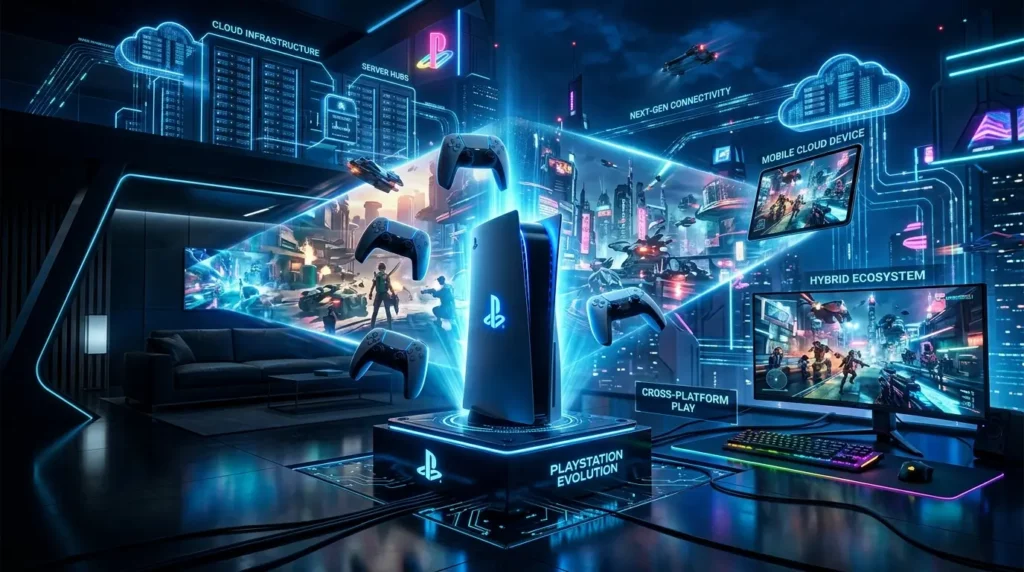
PlayStation’s cloud gaming efforts remain more cautious than Microsoft’s, but Sony hasn’t abandoned the space. PlayStation Remote Play and cloud streaming features within PlayStation Plus Premium show the company is hedging toward a hybrid future.
The consensus among industry analysts: Sony sees hardware remaining central through at least the PS6 generation, but the long-term business model increasingly revolves around services revenue that doesn’t depend on a player owning the newest console.
How Much Does It Cost to Start a PlayStation Business?
For entrepreneurs and content creators wondering how to build a business around the PlayStation platform — rather than working for Sony — the costs vary widely depending on the model.
Game development for PS5: Getting a game published on the PlayStation Store requires enrollment in the PlayStation Partners program, which Sony doesn’t publicly charge a flat fee to join. However, development costs for a professional PS5 game can range from tens of thousands (for small indie titles) to hundreds of millions for AAA productions.
Content creation and media: Building a PlayStation-focused YouTube channel, podcast, or gaming blog requires little upfront investment — a PS5 console (~$499), capture card, and basic recording equipment can get started for under $1,000.
PlayStation Plus reselling or retail: Selling PlayStation accessories, game codes, or subscriptions through retail or affiliate channels requires standard retail or affiliate business setup costs, typically a few hundred to a few thousand dollars, depending on inventory scale.
For most individuals, building a sustainable business-adjacent venture is more accessible than ever, particularly through content creation, affiliate marketing, or indie game development.
PlayStation Platform Games: First-Party Power
One of PlayStation’s greatest competitive advantages is its library of exclusive titles. PlayStation platform games from Sony’s own studios — including Naughty Dog, Santa Monica Studio, Insomniac Games, and others — routinely top sales charts and win awards.
Franchises like The Last of Us, God of War, Gran Turismo, Horizon, Spider-Man, and Ghost of Tsushima aren’t just critically acclaimed — they’re platform-sellers. Players buy PlayStation hardware specifically to access these games.
This exclusivity strategy has been central to the Sony PlayStation platform business for decades, and shows no signs of changing in the near term. Sony’s continued acquisition of studios and investment in first-party development reflects a belief that owned IP is the platform’s most durable competitive asset.
Conclusion: A Business Built to Last
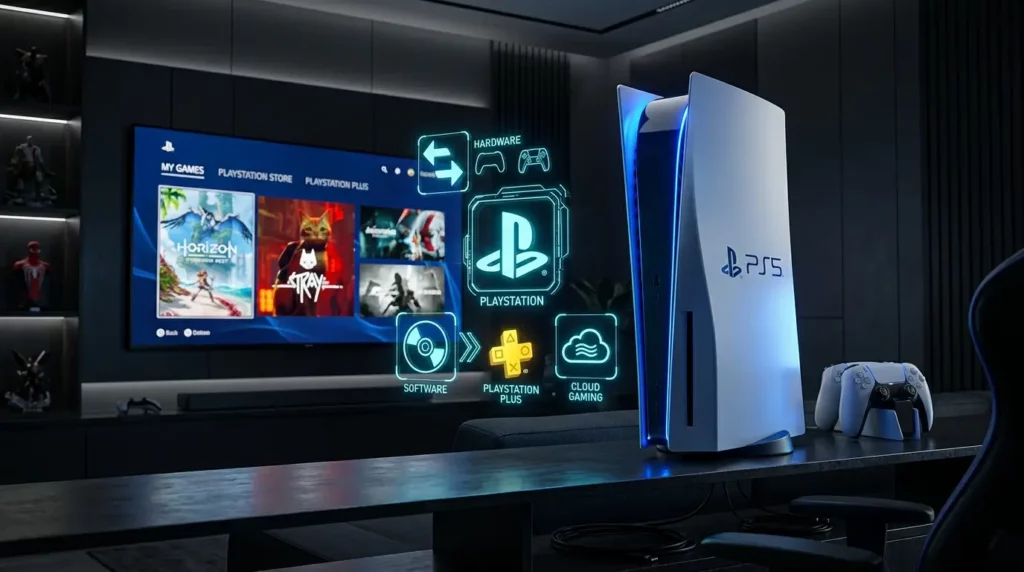
The Sony PlayStation platform business is far more than a gaming brand — it’s a multi-billion-dollar ecosystem built around hardware, software, subscriptions, and exclusive content. From the PS5’s strong install base to a growing PlayStation Plus subscriber count, Sony has constructed one of entertainment’s most resilient and valuable platforms.
Is PlayStation profitable for Sony? Broadly, yes — and it’s becoming more so as digital and subscription revenues grow. Is PlayStation still owned by Sony? Absolutely. Is it moving away from hardware? Slowly pivoting, but not walking away.
For players, developers, and investors alike, the PlayStation platform remains one of the most important businesses in global entertainment — and the next chapter, whether it’s PS6 or a cloud-native future, promises to be just as compelling as everything that came before.
FAQs — People Also Ask
Is PlayStation still owned by Sony?
Yes. PlayStation is fully owned by Sony Group Corporation and operated through its subsidiary, Sony Interactive Entertainment (SIE). Sony has owned the PlayStation brand since its creation in the early 1990s.
Is PlayStation profitable for Sony?
Yes, overall. While hardware can be sold near break-even at launch, Sony’s PlayStation business generates substantial profit through digital game sales, PlayStation Plus subscriptions, and third-party licensing fees. It’s one of Sony’s largest revenue-generating segments.
What is Sony’s most profitable business?
It varies by year, but Sony’s Financial Services and Music divisions often post higher operating margins. However, the PlayStation platform business consistently leads in total revenue across Sony’s portfolio.
Is PlayStation Access owned by Sony?
Yes. PlayStation Access is Sony’s officially designed accessibility controller for PlayStation 5, developed and sold directly by Sony Interactive Entertainment.
Is PlayStation moving away from hardware?
Not entirely. Sony is investing more heavily in subscriptions and PC gaming, but hardware remains core to its strategy. Industry analysts expect at least one more dedicated console generation (PS6) before any major platform shift.
