
Lice Egg on Finger: Complete Guide to Identification, Removal, and What It Means
Finding a lice egg on a finger after scratching the scalp or checking for head lice creates immediate concern for parents and individuals dealing with potential infestations. Understanding what these tiny eggs look like, whether they pose transmission risks, and how to properly identify them helps people respond appropriately to head lice situations.
This comprehensive guide explores everything about discovering a lice egg on a fingernail or fingertip, from distinguishing live versus dead eggs to understanding transmission risks and proper removal techniques. Knowing how to recognize these parasitic eggs empowers people to take effective action against head lice infestations.
What Does a Lice Egg on a Finger Look Like?
Visual Characteristics
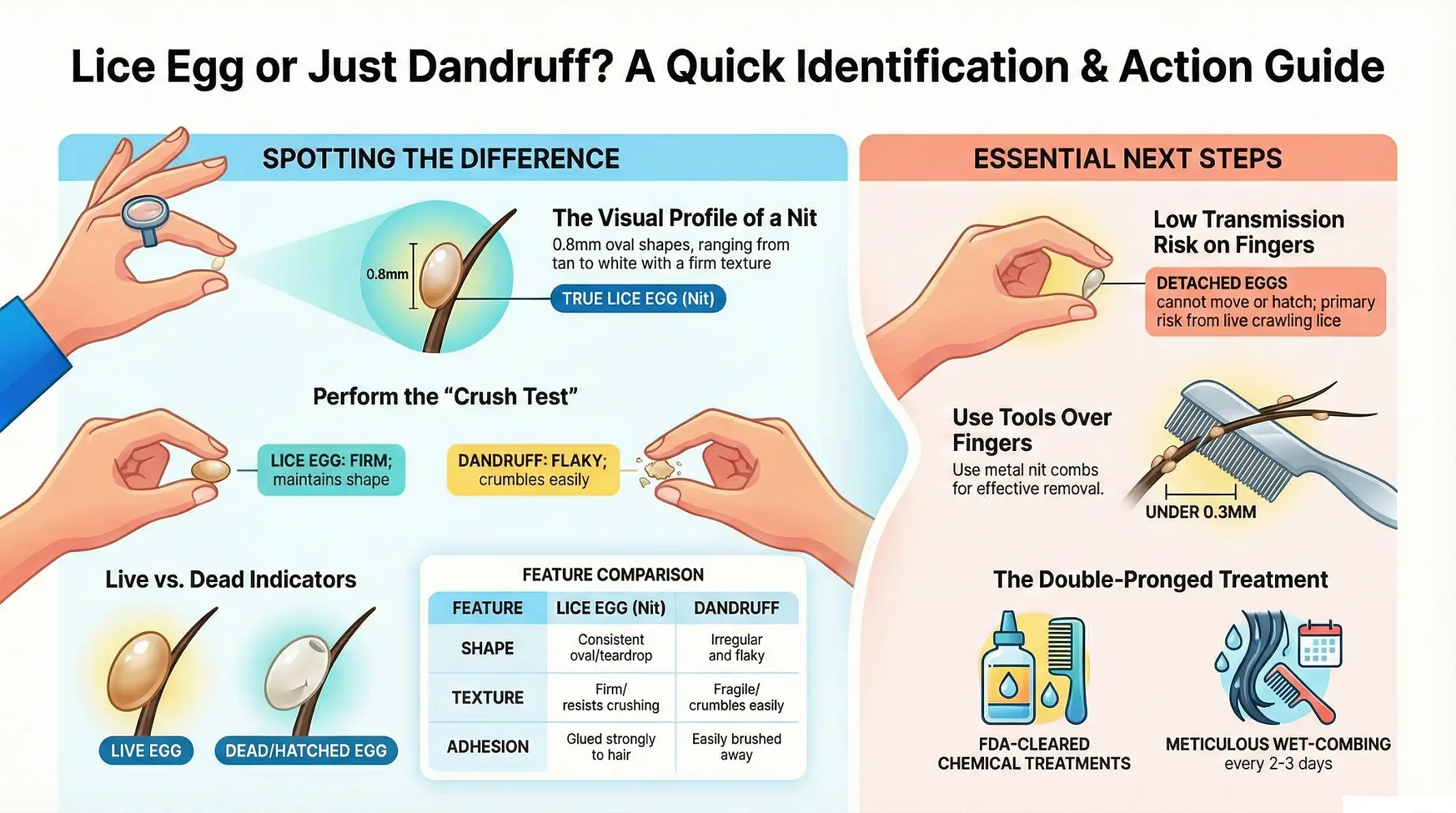
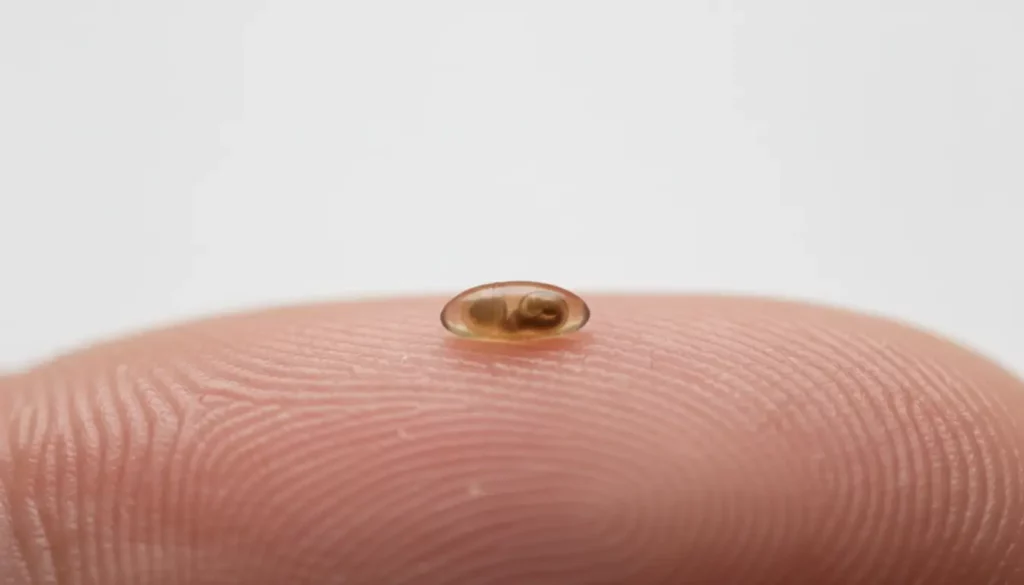
When someone finds a head lice egg on a finger after combing through hair or scratching their scalp, the egg appears as a tiny, oval-shaped object. These eggs, called nits, measure approximately 0.8mm in length—about the size of a sesame seed or smaller.
A lice egg on a finger tip typically displays these characteristics:
- Oval or teardrop shape
- Tan, brown, or white coloring, depending on whether alive or dead
- Slightly translucent appearance
- Firm texture that doesn’t easily crush
- May have a tail-like extension (the egg casing that attaches to hair)
The appearance helps distinguish between a live lice egg on a finger versus other scalp debris like dandruff or hair product residue.
Early Stage Lice Egg on Finger
An early-stage lice egg on the finger appears darker—typically brown or tan. These viable eggs contain developing louse nymphs and look different from hatched or dead eggs. The darker coloring comes from the developing louse visible through the translucent shell.
Fresh eggs recently laid on hair shafts show the most vibrant coloring, making them easier to spot during visual inspections or when they transfer to fingers during checking.
Dead Lice Egg on Finger vs. Live Eggs
Identifying Dead Eggs
A dead lice egg on a finger shows distinct characteristics that differentiate it from viable eggs. Understanding what color dead lice eggs on the finger appear helps determine infestation status and treatment effectiveness.
Dead egg characteristics:
- White or very pale tan color
- Flattened or collapsed appearance
- Dull, non-reflective surface
- Sometimes appears empty or translucent
- May feel lighter or more fragile
The paper towel dead lice egg on finger test involves placing the suspected egg on white paper. Dead eggs appear distinctly white or very pale against the white background, while live eggs show darker brown or tan coloring.
Live Egg Identification
Live eggs removed during a comb lice egg on finger inspection display:
- Brown, tan, or golden coloring
- Plump, well-formed oval shape
- Slight sheen or reflective quality
- Firm texture when gently pressed
- Dark spot visible inside (developing louse)
Recognizing these differences helps assess whether active infestation exists or if only old, hatched eggs remain from a previous case.
Lice Egg on Finger vs Dandruff
Key Differences
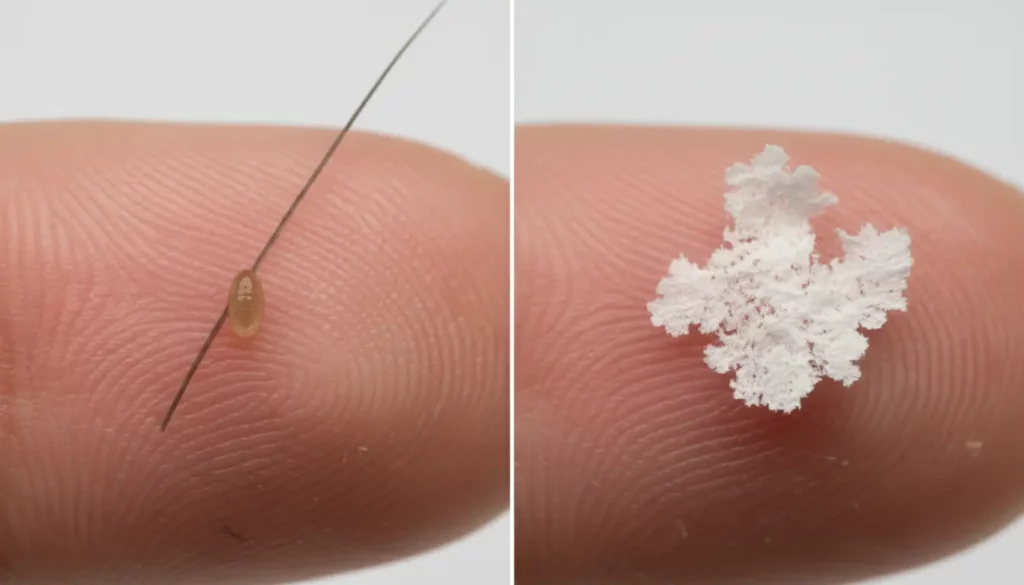
The difference between dandruff lice eggs onthe finger comes down to several distinguishing factors. Many people initially confuse the two, making proper identification crucial.
Dandruff characteristics:
- Irregular, flaky shape
- Pure white color
- Easily crushed or crumbled
- Easily removed from hair and fingers
- No defined oval shape
- Multiple pieces rather than single units
Lice egg characteristics:
- Consistent oval shape
- Tan, brown, or white, depending on status
- Firm texture resistant to crushing
- Adheres strongly to hair (when attached)
- Single, complete unit
- May have a visible tail from the attachment point
When examining suspected eggs, the dandruff lice egg on finger test involves attempting to crush the object between fingers. Dandruff crumbles easily, while lice eggs maintain their shape under light pressure.
Visual Comparison
A lice egg on a finger reddit discussions often include photos showing the stark contrast between dandruff flakes and actual nits. Users share images demonstrating that dandruff appears irregular and flaky, while lice eggs show consistent, seed-like shapes regardless of whether they’re viable or empty.
Can Lice Eggs Transfer Through Fingers?
Transmission Risks
One major concern when finding a lice egg on a fingernail involves whether eggs can spread the infestation through hand contact. Understanding transmission mechanisms helps people take appropriate precautions.
Important facts about lice egg transmission:
- Eggs cannot move on their own
- Nits require attachment to hair shafts near the scalp to survive
- Eggs found on fingers are already detached and non-viable for hatching
- Lice eggs need a specific temperature and humidity found near the scalp
- Contact transmission primarily occurs through live lice, not eggs
While a lice infestation lice egg on a finger, indicates active or recent infestation, the eggs themselves pose minimal transmission risk once removed from hair. The primary concern involves live lice crawling between heads during direct contact.
Proper Handling
When someone discovers a big lice egg on a finger or multiple eggs during checking, proper disposal prevents any theoretical risk:
- Avoid touching your eyes, nose, or mouth after handling
- Dispose of eggs in a sealed plastic bag or flush them down the toilet
- Wash your hands thoroughly with soap and warm water
- Clean combs and tools used for checking
- Avoid sharing the same tools without cleaning
These precautions address hygiene concerns, even though detached eggs cannot hatch or spread infestation.
How to Identify Lice Eggs: Head Lice Egg on Finger Examination
Visual Inspection Techniques
When conducting a look-like lice egg on finger inspection, proper lighting and magnification help confirm identification:
Inspection steps:
- Use bright natural light or an LED lamp
- Examine the object against a white background
- Note color, shape, and texture
- Check for the characteristic oval shape
- Look for the tail-like attachment remnant
- Compare size to known reference (sesame seed)
Taking photos with smartphone macro mode allows zooming in for detailed examination and comparison with online reference images.
Common Misidentifications
Several things resemble lice eggs when found on fingers after hair checking:
Often confused with nits:
- Dandruff flakes
- Hair product residue
- Scabs or dried skin
- Hair gel or spray buildup
- Dried shampoo
- Sand or debris from outdoors
My hair lice egg on finger sometimes stems from these common scalp debris rather than actual parasitic eggs. Taking time to properly identify prevents unnecessary anxiety and treatment.
Removing Lice Eggs: Proper Techniques
Can You Pull Lice Eggs Out with Your Fingers?
Many people wonder whether manual removal works for eliminating nits. While possible, finger removal presents challenges:
Finger removal limitations:
- Eggs attach very firmly to hair shafts
- An adhesive substance requires a significant force to break
- Risk of pulling out hair along with the egg
- Difficult to see all eggs without magnification
- Time-consuming and often incomplete
Professional lice removal specialists and dermatologists recommend specialized nit combs rather than finger removal for thorough elimination.
Effective Removal Methods
Proper egg removal involves:
- Wet Combing: Dampening hair makes eggs slightly more visible and easier to remove with fine-toothed metal nit combs
- Section by Section: Dividing hair into small sections ensures thorough checking and removal
- Good Lighting: Bright light helps spot eggs that might otherwise be missed
- Multiple Sessions: Checking every 2-3 days for two weeks catches newly hatched lice before they mature
- Professional Tools: Metal nit combs with spacing smaller than 0.3mm effectively remove eggs
Are Lice Eggs Harmful?
Health Implications
Lice eggs themselves cause minimal direct harm beyond indicating active or recent infestation. Understanding the actual risks helps maintain perspective:
Direct effects of lice eggs:
- No pain or discomfort from eggs alone
- No disease transmission from nits
- Cosmetic concern when visible in hair
- Potential embarrassment or social stigma
- An indicator of active lice presence requiring treatment
Secondary concerns:
- Itching from live lice feeding (not from eggs)
- Skin irritation from scratching
- Potential secondary infection from broken skin
- Psychological stress and anxiety
- Social implications and school policies
The eggs represent the reproductive stage of head lice infestation, but don’t directly cause the itching and discomfort associated with active lice.
Viable vs. Hatched Eggs
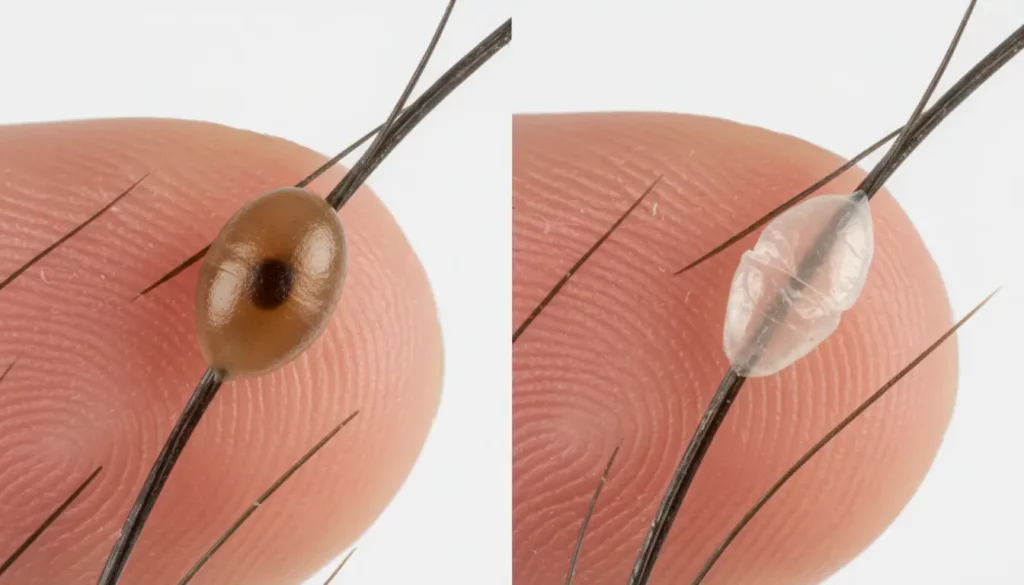
How to know if a lice egg is alive involves examining color and appearance:
Live egg indicators:
- Brown or tan coloring
- Plump, well-formed shape
- Dark spot visible inside (embryo)
- Positioned within 1/4 inch ofthe scalp
- Shiny appearance
Hatched/dead egg indicators:
- White or translucent color
- May appear flattened
- Empty appearance
- Can be any distance from the scalp
- Dull appearance
Only viable eggs close to the scalp pose a concern for continuing infestation.
Treatment: What Kills Lice Eggs Fast?
Effective Treatment Options
When lice eggs appear on fingers during checking, proper treatment eliminates both live lice and eggs:
Over-the-counter treatments:
- Permethrin lotion (1%)
- Pyrethrin-based products
- Dimethicone-based suffocants
- Isopropyl myristate solutions
Prescription treatments:
- Malathion lotion (0.5%)
- Benzyl alcohol lotion (5%)
- Ivermectin lotion (0.5%)
- Spinosad topical suspension
Physical removal:
- Wet combing with a metal nit comb
- Professional lice removal services
- Heat treatment devices (FDA-cleared)
Combination Approaches
The most effective strategy combines chemical or suffocant treatment with thorough physical removal:
- Apply treatment according to product instructions
- Wait recommended time (varies by product)
- Rinse thoroughly
- Use a nit comb to remove dead lice and eggs
- Repeat treatment 7-10 days later
- Continue combing between treatments
- Check all household members
This comprehensive approach addresses both adult lice and eggs at different life stages.
Prevention and Ongoing Management
Reducing Transmission Risk
While finding a lice egg on a finger indicates current or recent infestation, prevention strategies reduce future occurrences:
Preventive measures:
- Avoid head-to-head contact during play
- Don’t share hats, brushes, or hair accessories
- Teach children about lice prevention
- Regular hair checks, especially during outbreak seasons
- Keep long hair tied back in group settings
- Educate about transmission methods
Regular Monitoring
Conducting regular checks helps catch infestations early when they’re easier to treat:
- Weekly visual inspections during the school year
- Immediately check if exposure is reported
- Examination of all family members if one person is affected
- Focus on areas behind the ears and near the nape of the neck
- Use bright light and sectioning for thorough checks
Frequently Asked Questions
Can you pull lice eggs out with your fingers?
While technically possible to pull lice eggs out with fingers, this method proves ineffective as the primary removal strategy. Lice eggs attach to hair shafts with an incredibly strong adhesive that requires significant force to break. Attempting finger removal often pulls out hair along with eggs and misses many nits that aren’t easily visible. Professional lice specialists recommend using fine-toothed metal nit combs specifically designed for egg removal, combined with proper lighting and sectioning techniques for thorough elimination.
Are lice eggs harmful?
Lice eggs themselves cause no direct physical harm, pain, or disease transmission. They represent the reproductive stage of head lice but don’t bite, feed, or cause the itching associated with active lice infestations. The primary harm comes from what eggs represent—an active or recent lice infestation requiring treatment. Secondary concerns include social stigma, anxiety, potential skin irritation from scratching (caused by adult lice, not eggs), and school policies requiring treatment before return.
How to know if a lice egg is alive?
Live lice eggs appear brown or tan in color with a plump, well-formed oval shape and slight sheen. They’re typically found within 1/4 inch of the scalp, where warmth helps development. A dark spot visible inside indicates the developing louse embryo. Dead or hatched eggs appear white or translucent, may look flattened or empty, have a dull appearance, and can be any distance from the scalp. The “pop test”—gently pressing the egg between fingernails—can help; viable eggs pop while empty ones collapse.
What kills lice eggs fast?
The fastest way to eliminate lice eggs combines FDA-approved chemical treatments with thorough manual removal. Prescription treatments like malathion, ivermectin, or spinosad kill eggs more effectively than many over-the-counter options. However, no treatment kills 100% of eggs instantly, which is why combining chemical treatment with meticulous wet combing using a metal nit comb producesthe best results. Professional heat-based treatments at lice removal clinics can kill eggs in a single session, though they’re more expensive than at-home treatments.
What’s the difference between lice eggs and dandruff on fingers?
Lice eggs on fingers appear as consistent oval shapes with tan, brown, or white coloring, a firm texture that resists crushing, and may have a tail-like attachment remnant. They measure about 0.8mm and maintain their shape under light pressure. Dandruff flakes are irregular, purely white, easily crumbled between fingers, have no defined shape, and break apart readily. The crushing test clearly distinguishes them—dandruff disintegrates immediately while lice eggs remain intact. Additionally, single lice eggs appear as complete units while dandruff presents as multiple irregular flakes.
Conclusion
Finding a lice egg on a finger during head checking confirms an active or recent lice infestation requiring appropriate treatment and follow-up. Understanding what these eggs look like, how to distinguish them from dandruff, and whether they pose transmission risks through hand contact helps people respond effectively to head lice situations.
Whether discovering a dead lice egg on a finger or viable brown eggs, proper identification enables appropriate action. The difference between dandruff lice egg on the finger becomes clear when examining shape, color, texture, and crushability. While eggs themselves cause no direct harm, they indicate the need for comprehensive treatment addressing both adult lice and eggs.
Effective management combines proper identification, thorough treatment using approved products, meticulous physical removal with specialized combs, and preventive measures reducing future transmission. Understanding that a lice egg on a fingernail or fingertip poses minimal transmission risk once detached from hair alleviates some concerns while maintaining focus on proper treatment protocols.
As head lice continue affecting millions annually, particularly among school-age children, recognizing lice eggs remains an important skill for parents, caregivers, and affected individuals. The ability to confidently identify a head lice egg on a finger, distinguish it from common scalp debris, and take appropriate action empowers people to manage infestations effectively while avoiding unnecessary anxiety over normal scalp conditions.


