
Hen Lice Treatment: Complete Guide to Eliminating Chicken Lice and Preventing Infestations
Hen Lice Treatment: Complete Guide
Discovering a lice infestation in a chicken flock can be distressing for poultry keepers, but effective treatments are available to eliminate these pesky parasites and restore flock health. Chicken lice represent one of the most common external parasites affecting backyard and commercial poultry, causing discomfort, reduced egg production, and overall stress to birds.
Understanding proper henlice treatment involves recognizing infestation signs, selecting appropriate treatment methods, and implementing prevention strategies to keep flocks healthy. This comprehensive guide explores everything from chicken lice treatment home remedy solutions to commercial products, helping poultry keepers make informed decisions about protecting their birds.
Understanding Chicken Lice Infestations
What Are Chicken Lice?
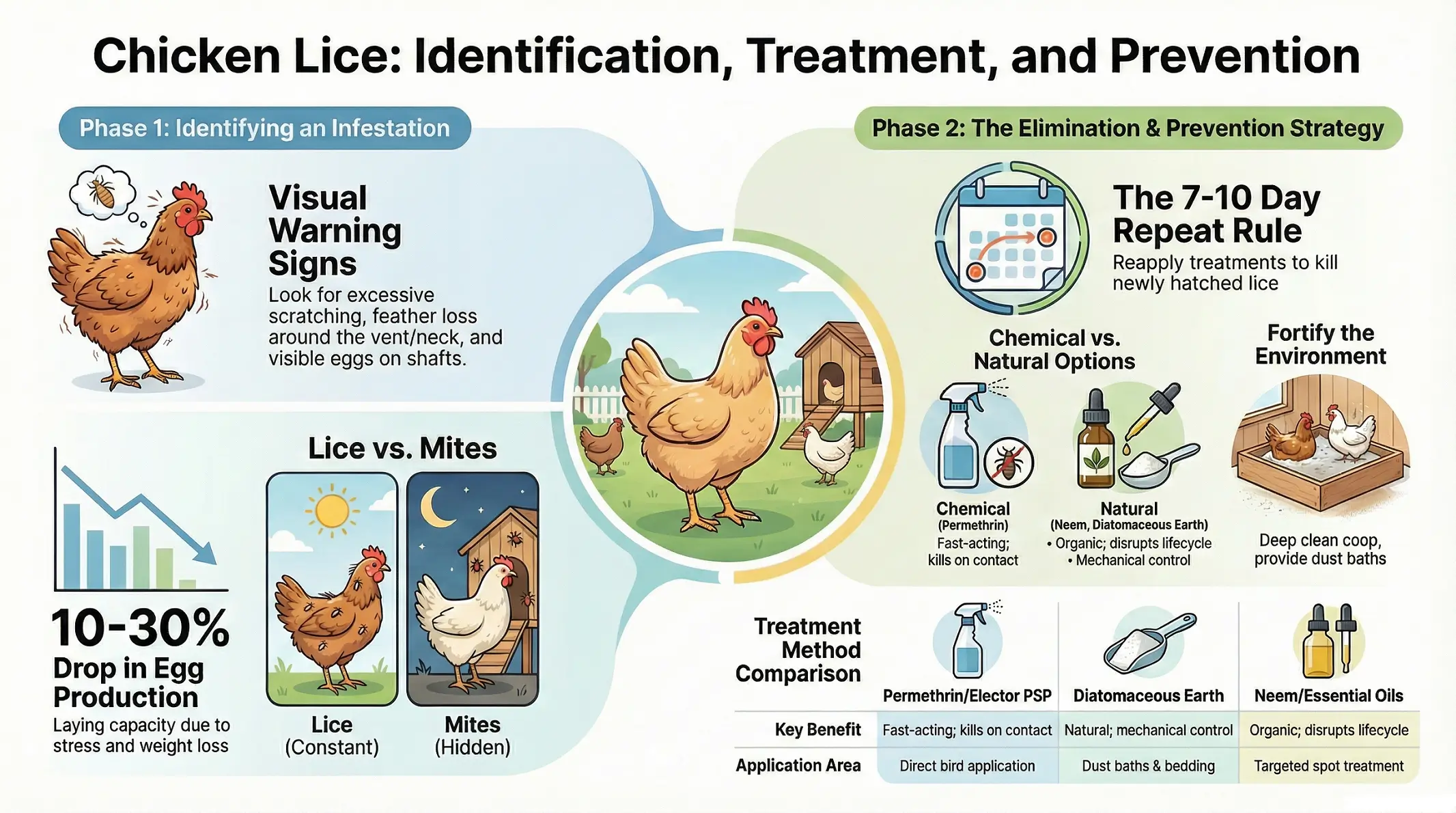
Chicken lice are small, wingless external parasites that spend their entire lifecycle on birds. Unlike mites that feed on blood, lice primarily consume dead skin cells, feather debris, and scabs. These parasites spread rapidly through direct bird-to-bird contact and shared environments.
The most common signs of lice infestations include:
- Excessive scratching and preening
- Feather damage or loss, particularly around the vent area and neck
- Visible lice or eggs (nits) on feather shafts
- Reduced egg production
- Weight loss in severe cases
- Pale combs and wattles
- Restless behavior and stress
Lice vs. Mites: Important Differences
While often confused, lice and mites require different treatment approaches. Mites like red roost mites and scaly leg mites feed on blood and hide in coop crevices during the day. Lice remain on birds constantly, making them easier to identify through regular monitoring.
Understanding these differences ensures poultry keepers select appropriate treatments. While some products work for both parasites, others specifically target either lice or mite infestations.
Hen Lice Treatment Options
Chemical Treatments and Sprays
Commercial chicken lice treatment spray products offer quick, effective solutions. Permethrin sprays represent the most commonly used chemical treatments, killing lice on contact while providing residual protection.
Elector PSP stands out as a highly effective treatment option. This product requires proper application directly to birds, treating the entire flock simultaneously. The treatment typically shows results within 24-48 hours, with complete elimination following proper protocol.
Other commercial poultry lice treatment options include:
- Pyrethrin-based sprays
- Permethrin dusts and powders
- Ready-to-use spray bottles for individual bird treatment
- Concentrated solutions for coop and environmental treatment
Always follow product instructions carefully, noting any egg withdrawal periods if treating laying hens.
Hens Lice Treatment Powder
Dust and powder formulations provide alternative application methods. Hens’ lice treatment powder typically contains:
Diatomaceous Earth (DE): Food-grade DE works mechanically rather than chemically, dehydrating lice through its abrasive silica particles. While natural, DE requires repeated applications as it only affects lice through direct contact.
Wood Ash: Traditional treatmentcreates alkaline dust that lice find inhospitable. Many chicken keepers add wood ash to dust baths for ongoing prevention.
Commercial Lice Powders: Formulated specifically for poultry, these combine insecticidal ingredients with carrier powders for easy application.
Application involves thoroughly dusting birds, paying special attention to areas where lice concentrate: under wings, around the vent area, along the neck, and at the base of feather shafts.
Chicken Lice Treatment Home Remedy Solutions
Natural and Organic Options
Many poultry keepers prefer chicken lice treatment home remedy approaches, especially for organic flocks or personal preference. Effective natural remedies include:
Neem Oil Treatment: Neem oil disrupts lthe ice lifecycle and repels parasites. Mix with carrier oils and apply to affected areas, avoiding the face and eyes. Repeat applications every 7-10 days for three cycles to catch newly hatched lice.
Olive Oil Application: Coating lice-infested areas with olive oil suffocates parasites. This gentle method works well for spot treatments on individual birds.
Garlic and Herbs: Adding garlic to water or feed may help repel parasites, though evidence remains anecdotal. Herbs like lavender, mint, and rosemary in nesting boxes create aromatic deterrents.
Dust Baths Enhanced: Providing quality dust baths with sand, diatomaceous earth, and wood ash allows chickens to naturally control external parasites through their instinctive bathing behavior.
Essential Oil Blends
Some poultry keepers create essential oil sprays combining:
- Tea tree oil (antiparasitic properties)
- Lavender oil (calming and repellent)
- Eucalyptus oil (insect deterrent)
- Peppermint oil (cooling and repellent)
Dilute properly with water and carrier oils, as concentrated essential oils can irritate birds’ respiratory systems.
Regional Treatment Availability
Chicken Lice Treatment Canada
Canadian poultry keepers access chicken lice treatment in Canada through farm supply stores, veterinary clinics, and online retailers. Popular Canadian products include:
- Permethrin-based dusts and sprays
- Diatomaceous earth (widely available)
- Elector PSP (through veterinary prescription)
- Natural oil-based treatments
Canadian regulations require following product labels carefully, noting any restrictions on egg consumption during and after treatment.
Chicken Lice Treatment NZ
In New Zealand, chicken lice treatment nz options include both commercial and natural products available through agricultural suppliers. Common treatment approaches follow similar principles to other regions, with products adapted to local regulations and preferences.
Chicken Lice Treatment Bunnings
Australian poultry keepers often ask about chicken lice treatment and Bunnings availability. While Bunnings stocks various pest control products, specific poultry parasite treatments may be better sourced from agricultural suppliers or specialty poultry stores that carry products formulated specifically for chickens.
Treatment Protocols and Application
Step-by-Step Treatment Process
Effective hen lice treatment requires a systematic approach:
1. Identify and Confirm: Examine birds carefully, looking for lice or eggs on feather shafts, particularly around the vent area, under wings, and on the neck.
2. Isolate if Possible: If treating individual birds, separation prevents immediate reinfestation, though treating the entire flock simultaneously often proves more effective.
3. Apply Treatment: Follow product instructions precisely:
- For sprays: Thoroughly wet feathers, lifting to reach skin
- For powders: Dust generously, working into feathers
- For oils: Apply to affected areas, avoiding the face
4. Treat Environment: Clean and treat the chicken coop, nesting boxes, roosts, and surrounding areas to eliminate environmental reservoirs.
5. Repeat Application: Most treatments require reapplication after 7-10 days to kill newly hatched lice from eggs that survived the initial treatment.
6. Monitor Progress: Regular monitoring over 2-3 weeks ensures treatment success and catches any remaining parasites.
Chicken Lice Treatment Ivermectin
Chicken lice treatment ivermectin represents a systemic approach, though lice (unlike mites) don’t respond well to ivermectin since they don’t feed on blood. Ivermectin works better for mite infestations and internal parasites. For lice, topical treatments prove more effective.
Consult with veterinarians before using ivermectin, as proper dosing and egg withdrawal periods must be observed.
Preventing Lice Infestations
Biosecurity Measures
Prevention proves easier than treating established infestations. Key prevention strategies include:
Quarantine New Birds: Isolate new birds for 2-3 weeks before introducing them to the flock. Treat any signs of parasites before integration.
Limit Wild Bird Contact: Wild birds can introduce parasites. Secure feed storage and minimize areas where wild birds congregate near the coop.
Regular Cleaning: Maintain clean bedding, remove droppings regularly, and periodically deep-clean the chicken coop to reduce parasite-friendly environments.
Dust Bath Access: Provide designated dust bath areas with sand, diatomaceous earth, and wood ash, encouraging natural parasite control behavior.
Ongoing Monitoring
Regular monitoring catches lice infestations early, when treatment is easiest. Kassandra Smith and other poultry experts recommend:
- Weekly visual checks of birds during egg collection
- Monthly thorough examinations of several birds
- Attention to behavioral changes indicating discomfort
- Monitoring egg production for unexplained drops
Early detection allows treating small problems before they become severe cases affecting the entire chicken flock.
Health Impacts and Recovery
Effects on Flock Health
Lice infestations stress chickens, compromising their immune systems and overall health. Common impacts include:
- Reduced egg production (dropping 10-30% in severe infestations)
- Weight loss from constant irritation and stress
- Feather damage is affecting the insulation and appearance
- Secondary skin infections from excessive scratching
- Weakened immunity makes birds susceptible to other illnesses
Prompt effective treatment restores birds to normal within days to weeks, depending on infestation severity.
Supporting Recovery
After treatment, support flock recovery through:
- High-quality nutrition supporting feather regrowth
- Clean, stress-free environment
- Monitoring for secondary infections
- Ensuring adequate protein for feather replacement
- Providing vitamin supplements if needed
Most flocks return to normal egg production and behavior within 2-3 weeks after successful treatment.
Chicken Lice Treatment for Humans
Human Exposure Concerns
While chicken lice are species-specific and don’t establish populations on humans, people handling infested birds sometimes ask about chicken lice treatment for humans. Chicken lice may briefly crawl on human skin, but cannot survive or reproduce on people.
If chicken lice contact skin:
- They’ll leave voluntarily within hours
- Simply wash affected areas with soap and water
- Change and wash clothes worn while handling birds
- No special human treatment is typically necessary
This differs from human head lice, which are a separate species requiring different treatment entirely.
Commercial vs. Natural Treatment Methods
Comparing Approaches
Chemical Treatments:
- Pros: Fast-acting, highly effective, convenient
- Cons: Egg withdrawal periods, environmental concerns, and cost
- Best for: Severe cases, large flocks, quick resolution needed
Natural Remedies:
- Pros: No egg withdrawal, environmentally friendly, and ongoing use is safe
- Cons: Slower action, requires more applications, variable effectiveness
- Best for: Mild infestations, organic operations, prevention
Many poultry keepers combine approaches, using chemical treatments for active infestations while maintaining natural prevention methods.
Frequently Asked Questions
What is the fastest way to treat chicken lice?
The fastest chicken lice treatment involves using commercial permethrin sprays or Elector PSP applied to all birds simultaneously, combined with thorough coop cleaning. Results appear within 24-48 hours, with complete elimination after a second treatment 7-10 days later. This two-treatment protocol ensures newly hatched lice from surviving eggs are also eliminated.
How do you apply hen lice treatment powder?
To apply hens’ lice treatment powder, hold the bird securely and dust powder generously over the body, paying special attention to under wings, around the vent area, along the neck, and at the base of feather shafts where lice concentrate. Part feathers to ensure powder reaches skin. Repeat application after 7-10 days to kill newly hatched lice.
What home remedies work for chicken lice treatment?
Effective chicken lice treatment home remedy options include neem oil applications, olive oil spot treatments, enhanced dust baths with diatomaceous earth and wood ash, and diluted essential oil sprays. While slower than chemical treatments, these natural methods work well for mild infestations and ongoing prevention when applied consistently over 2-3 weeks.
Can chicken lice spread to humans?
Chicken lice are species-specific and cannot establish populations on humans. While they may briefly crawl on human skin when handling infested birds, they cannot survive or reproduce on people. Simply wash your skin and change clothes after handling affected birds. No special chicken lice treatment for humans is necessary, as they naturally leave human hosts.
How often should you treat chickens for lice?
For active infestations, treat chickens initially, then repeat after 7-10 days to eliminate newly hatched lice. For prevention, provide ongoing access to quality dust baths, maintain clean coops, and conduct monthly visual checks. Treat only when lice are detected rather than on a predetermined schedule, unless birds are particularly prone to infestations or in high-risk environments.
Conclusion
Effective hen lice treatment combines proper identification, appropriate product selection, thorough application, and consistent prevention strategies. Whether choosing commercial chicken lice treatment spray products, hens’ lice treatment powder formulations, or chicken lice treatment home remedy approaches, success depends on treating both birds and their environment while addressing the complete lice lifecycle.
From chicken lice treatment ivermectin considerations to natural alternatives using neem oil and diatomaceous earth, poultry keepers have numerous options for protecting flock health. Regional availability differences—whether seeking chicken lice treatment in Canada, chicken lice treatment nz, or chicken lice treatment Bunnings in Australia—mean researching local product options ensures access to effective treatments.
The key to managing these pesky parasites lies in regular monitoring, early intervention, and maintaining clean environments that discourage lice infestations. By understanding common signs of infestation, implementing systematic treatment protocols, and supporting recovery through proper nutrition and stress reduction, poultry keepers can eliminate chicken lice and prevent future problems.
As poultry health awareness grows and new treatment options emerge, staying informed about both chemical treatments and natural remedies helps chicken keepers make the best choices for their specific situations. Whether managing a small backyard chicken flock or a larger poultry operation, proper lice management ensures birds remain healthy, productive, and comfortable—the foundation of successful chicken keeping.


